The Assassination That Should Have Been Impossible: The Billy Wright Maze Prison Case
- Ice Studio
- 1 day ago
- 6 min read

Introduction
On December twenty-seven, nineteen ninety-seven, Billy Wright was inside one of Britain’s most secure prisons.
He was not on the street.He was not in hiding.He was not moving freely through Northern Ireland.
He was in custody.
And yet, his enemies still reached him.
The killing of Billy Wright inside the Maze Prison became one of the most disturbing prison security failures connected to the final years of the Troubles. It raised questions about custody, risk management, prison intelligence, paramilitary segregation, and how a high-risk prisoner could be killed inside a heavily controlled institution.
Years later, the official Billy Wright Inquiry examined the case in detail. The inquiry found serious failings in the management and running of the Maze Prison. The UK government later stated that Wright’s murder should never have happened. At the same time, the inquiry rejected allegations that the state had colluded in the killing.
This article breaks down the case in a careful, factual, and educational way.
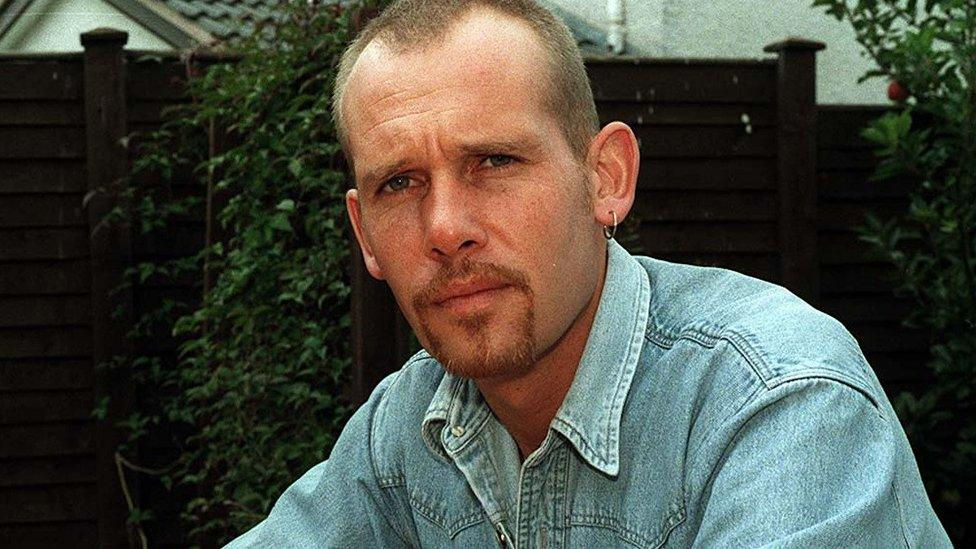
Who Was Billy Wright?
Billy Wright was a loyalist paramilitary figure in Northern Ireland during the Troubles. He became associated with the Loyalist Volunteer Force, known as the LVF, a violent loyalist paramilitary organisation.
Because of his position, his reputation, and the political tensions surrounding him, Wright was considered an extremely high-risk prisoner.
His imprisonment did not remove the danger around him. In some ways, it concentrated that danger inside a prison environment where rival groups, political violence, and security pressures existed side by side.
The Maze Prison was not an ordinary prison. It housed prisoners from rival paramilitary organisations, and its internal structure was shaped by the realities of the conflict in Northern Ireland.
That context is important. It helps explain why the question at the heart of this case became so serious:
How could such a high-risk prisoner be killed while under state protection?
The Maze Prison and H Block Six
The Maze Prison, also known as Long Kesh, was one of the most significant prisons of the Troubles.
It held prisoners connected to different paramilitary organisations. These groups were often separated, but the prison still carried enormous security risks.
Billy Wright was held in H Block Six.
The major problem later examined by the inquiry was that rival prisoners were also housed in the same block area. That decision became one of the most important issues in the case.
The danger was not theoretical. The prison authorities were managing prisoners connected to organisations with long histories of violence, hostility, and retaliation.
Inside that environment, even small security weaknesses could become fatal.
The Morning of December Twenty-Seven, Nineteen Ninety-Seven
On the morning of December twenty-seven, nineteen ninety-seven, Billy Wright was being moved for a prison visit.
During that movement, three prisoners linked to the Irish National Liberation Army, known as the INLA, carried out the attack.
Wright was fatally shot inside the prison.
The killing shocked the prison system because it happened in a place where he was supposed to be under state control and protection.
This was not only a story about one prisoner being killed by rival inmates. It was also a story about how security procedures, prisoner placement, movement routines, and institutional decisions failed to prevent a predictable risk.
Why the Case Became So Controversial
The killing immediately raised major questions.
Why were rival prisoners in the same block?How was a weapon available inside a high-security prison?Were warning signs missed?Were security procedures strong enough?Who was responsible for protecting a prisoner considered to be at serious risk?
The case also became controversial because of allegations that went beyond ordinary prison failure.
Some questioned whether there had been collusion or deliberate facilitation. These allegations became part of the wider public concern around the case and were later examined by the official inquiry.
The Billy Wright Inquiry ultimately rejected allegations of state collusion. However, it did identify serious failings in the prison system.
That distinction matters.
The official finding was not that the state planned or colluded in the killing.The official finding was that serious failures helped create the conditions in which the killing happened.
The Billy Wright Inquiry
The Billy Wright Inquiry was established to examine the circumstances surrounding Wright’s murder.
Its report was published in twenty ten.
The inquiry looked at the management of the Maze Prison, the decisions made before the killing, and the security environment that allowed the attack to happen.
The official findings were deeply critical of the prison system.
The inquiry found serious shortcomings in the management and running of the Maze Prison at the time of Wright’s death. The UK government later acknowledged that Wright was in the protective custody of the state and that his murder should never have happened.
At the same time, the inquiry rejected allegations that the state had colluded in the killing.
This makes the case complex.
It is not a simple story of conspiracy.It is also not a simple story of random prison violence.
It is a story of institutional failure inside one of the most sensitive prison systems in the United Kingdom.
The Government Response
After the inquiry report was published, the UK government accepted that major failures had occurred.
The government stated that Billy Wright’s murder should never have happened and that failings in the system had facilitated the killing.
This response was significant because it confirmed that the case was not being dismissed as an unavoidable prison incident.
Wright was in custody.The state had responsibility for his safety.The prison system failed to protect him.
The government also repeated the inquiry’s conclusion that allegations of state collusion had been examined and rejected.
Why This Case Still Matters
The Billy Wright assassination still matters because it touches several difficult issues at once.
It is about prison security.It is about political violence.It is about institutional responsibility.It is about how governments protect people in custody, even when those people are controversial or connected to serious violence.It is about the difference between proven collusion and proven failure.
In a lawful system, protection in custody is not based on whether a person is liked, disliked, feared, or hated.
Once the state holds someone in custody, the state has a duty to keep that person safe.
That is why the Billy Wright case remains so uncomfortable.
It forces a hard question:
If a high-risk prisoner could be killed inside one of Britain’s most secure prisons, what does that say about the system that was supposed to protect him?
A Case About More Than One Man
Billy Wright’s name remains controversial because of his paramilitary role and the wider history of violence during the Troubles.
But this case is not about glorifying him.It is not about defending paramilitary groups.It is not about turning political violence into entertainment.
This case is about examining the facts of a prison killing that should not have happened.
It is about understanding how security systems fail.It is about asking how rival prisoners were placed close enough for an attack to happen.It is about how warnings, risk assessments, routines, and institutional decisions can combine into disaster.
The killing of Billy Wright inside the Maze Prison remains one of the most serious prison security failures of the late Troubles period.
Conclusion
Billy Wright was inside a high-security prison when he was killed.
That single fact is what makes the case so powerful.
His murder was not supposed to be possible.But it happened.
The official inquiry found serious failings in the management and running of the Maze Prison. The UK government said the murder should never have happened. The inquiry rejected allegations of state collusion.
Those findings leave behind a difficult but important conclusion:
This was not only a killing inside a prison.
It was a failure of custody, security, and institutional responsibility during one of the most tense periods in Northern Ireland’s modern history.
Watch the Full Documentary
For the full step-by-step documentary version of this case, watch the video below:
Disclaimer
This article is for documentary, educational, historical, and news commentary purposes only. It is based on publicly available reporting and official inquiry material.
This article does not glorify violence, paramilitary organisations, criminal activity, or political extremism. It does not encourage hatred or harassment toward any person or group.
All individuals are presumed innocent unless convicted in a court of law. The purpose of this article is to examine the historical facts, prison security failures, and official findings surrounding the Billy Wright Maze Prison assassination.
Sources
The Billy Wright Inquiry Report
UK Government statement on the Billy Wright Inquiry Report
UK Parliament Hansard record on the Billy Wright Inquiry
Publicly available historical material on the Maze Prison and the Troubles
Tags
Billy Wright, Maze Prison, Billy Wright assassination, Northern Ireland history, The Troubles, Maze Prison documentary, prison security failure, true crime documentary, British history, Irish history, historical crime, public inquiry, H Block Six, Loyalist Volunteer Force, INLA, CrimePulseStories


Comments