The Oath of Blood: How John Shaw and Geoffrey Evans Became Ireland’s First Serial Killers
- Ice Studio
- Aug 6, 2025
- 6 min read

Updated: Aug 17, 2025
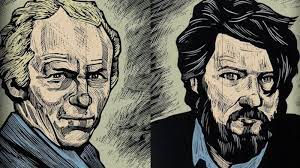
I keep coming back to one sentence. A vow. A chilling promise made in the smoky corner of a Dublin pub in the summer of 1976.
John Shaw turned to Geoffrey Evans and said: “We’ll kill one woman every week.”
At first glance, it sounds like a boast. The kind of outrageous threat that hardened criminals use to shock or impress. But when I dug into the case files, read the transcripts, and interviewed people who still remember, I realized it wasn’t an empty threat. It was a mission statement.
Two women would be dead before the month was out. And Ireland would be changed forever.
Who Were They, Really?
Whenever I write about killers, I always ask myself: were they born this way, or did life shape them?
John Shaw was the kind of man who could sit next to you at the bar and make you believe he was harmless. A drifter, a laborer, a man with quick jokes and quicker lies. But behind that mask was something else: a man who lived for control, for domination, for violence.
Geoffrey Evans was different. More reserved, quieter, but deeply unstable. On his own, maybe he would never have killed. But with Shaw? He became an accomplice to horror.
Psychologists later called their partnership a folie à deux — a “madness shared by two.” Shaw lit the match, Evans poured the gasoline.
The Victims: Two Ordinary Women in an Extraordinary Nightmare
Mary Duffy
I keep staring at her photograph in the archives. A soft smile. Hair tucked to the side. A woman with her life ahead of her.
On the night she met Shaw and Evans, she was doing what countless others did in Dublin: having a drink, chatting, enjoying life. She had no idea two predators were watching her every move.
They offered her a ride. She accepted. It was the last decision she ever made freely.
By the next morning, her body was found in a Galway forest. Naked. Strangled. Covered in leaves like the killers wanted her erased.
When I read the coroner’s notes, I couldn’t shake the feeling: this wasn’t just about violence. It was about ritual. They wanted control. They wanted to prove they could play God.
Elizabeth Plunkett
Elizabeth’s story is even harder to write. Friends said she loved Brittas Bay. She loved the seaside, the open air.
She went for a walk in August 1976 and never came home.
Her body, like Mary’s, was found discarded. Strangled. Hidden in the woods.
I couldn’t help but think: Shaw and Evans were keeping their promise. Two women, two murders. And if detectives hadn’t caught them when they did, how many more names would we be speaking today?
The Gardee Face a New Kind of Killer
As I went through old reports, I noticed something striking: the Gardee didn’t want to believe this was serial killing.
Ireland, up until then, hadn’t really faced it. Murders happened, yes, but the idea of a serial predator hunting women? That was “an American thing.”
But tire tracks matched. Witnesses placed Shaw and Evans in the area. Hotel guests recalled them acting nervous and agitated. A shopkeeper remembered Shaw buying rope.
The pieces fell together. Slowly, but inevitably.
The Arrest and Cracks in the Facade
When detectives brought them in, Evans broke first. He wasn’t as strong as Shaw. Under pressure, he began to talk, to hint at what they had done.
Shaw tried to stay silent, but silence is a strategy that can only last so long. Witnesses, evidence, Evans’s words — it all closed in.
One detective later said it was like “watching a mask peel off.” The confident drifters were suddenly exposed for what they really were: predators with a timetable.
Psychological Anatomy of a Pact
This is the part of the case that grips me most: not just the murders, but the psychology behind them.
Why make a promise to kill one woman a week? It wasn’t practical. It wasn’t logical. But it was deeply symbolic.
Psychologists argue that the vow was about domination and immortality. By putting their intent into words, Shaw and Evans made themselves feel larger than life. They weren’t just criminals anymore — they were self-declared executioners.
And strangulation? That wasn’t random. It’s one of the most intimate forms of killing. It takes time. It forces the killer to look into their victim’s eyes, to feel their struggle, to savor their control.
That’s not impulse. That’s ritual.
The Trial: A Nation Watches
When the case went to trial in 1977, Ireland watched in horror.
The charges were brutal: murder, abduction, sexual assault.
Evans tried to save himself by pointing the finger at Shaw. But the jury didn’t care. Both men were guilty. Both were sentenced to life.
But here’s the catch: “life” in Ireland didn’t mean what most people thought. It meant indefinite imprisonment with the possibility of review. No “whole life orders.” No ironclad guarantee they would never walk free.
And that technicality would come back decades later like a ghost.
Decades Behind Bars: The Transformation of John Shaw
Here’s where the story gets uncomfortable. Because Shaw didn’t spend his decades in prison as a monster. He became a “model prisoner.”
He studied. He avoided fights. He showed remorse in interviews. Prison staff described him as “cooperative” and “reformed.”
When I read those parole board notes, I felt uneasy. Was this genuine remorse, or just performance?
Because here’s the truth: some killers don’t need to kill once they’re locked away. Prison strips them of their hunting ground. But that doesn’t mean the predator inside is gone.
The Death of Evans and the Survival of Shaw
Geoffrey Evans died in prison in 2012. Heart failure. Old age.
John Shaw lived on. And with Evans gone, something chilling happened: Shaw became the sole keeper of their secret vow. The only living link to Ireland’s first serial murders.
The Parole Debate: Should Shaw Walk Free?
Fast forward to 2025. The news broke: John Shaw could be eligible for parole in 2026.
Nearly fifty years after the murders, the system might allow his release.
The reaction was instant:
Families of victims were horrified.
Politicians demanded answers.
Citizens asked: How can a man who promised to kill weekly be trusted to walk among us?
When I read the victims’ families’ statements, I felt their words cut deep: “No remorse can bring our daughters back. No parole can erase what he did.”
What Justice Means After 50 Years
This is where the story turns philosophical.
Does justice expire? Can a life sentence really mean release after half a century? Do “good behavior” and “model rehabilitation” erase the horror of two women strangled in the woods?
Some say yes — the law must be consistent. Shaw has served his time under Irish sentencing structures. If he’s reformed, he should walk free.
Others — and I find myself leaning this way — say no. Some crimes are beyond rehabilitation. Some vows cannot be forgotten.
Similar Cold Cases in Ireland
The Shaw and Evans murders weren’t the last time Ireland faced the horror of predatory violence. Other cases echo this story:
The Disappearance of Annie McCarrick (1993) — a missing American student many believe was the victim of a serial predator.
The Murder of Antoinette Smith (1987) — still unsolved, still haunted by whispers of ritualistic violence.
Sophie Toscan du Plantier (1996) — a case that exposed Ireland to international scrutiny.
Each of these reminds us that predators don’t vanish — they adapt. And justice, in Ireland, often comes painfully slowly.
Final Thoughts: The Oath That Still Echoes
When I close the case file on John Shaw, one sentence still chills me: “We’ll kill one woman every week.”
It wasn’t just a boast. It was a vow that claimed two lives.
And now, half a century later, Ireland has to decide: does time heal, or does time betray memory?
Because if John Shaw walks free in 2026, it won’t just be the release of a man. It will be the release of a promise. A dark oath that still echoes in Ireland’s forests, in its pubs, in the memories of the families who never stopped grieving.
true crime Ireland, John Shaw case, Geoffrey Evans murders, Mary Duffy, Elizabeth Plunkett, Irish serial killers, parole debate Ireland, murder mystery Ireland, 1976 serial killings, Gardee investigations
Sources
Labour.ie – Justice Minister must engage with Elizabeth Plunkett’s family
RTÉ – Stolen Sister Finale Recap: The Fight for Justice Continues
Irish Examiner – Sickening plan of our first serial killers (2004)
The Sun – DNA plea to nail one of Ireland’s first serial killers
The Sun – Family plea for cold case review of Elizabeth Plunkett murder


Comments