The Crybaby Killer — He Called 911 After Every Murder
- Ice Studio
- Aug 30, 2025
- 11 min read


Most killers go to extremes to cover their tracks. They wipe fingerprints, ditch weapons, make fake alibis, and vanish into the night hoping no one will ever connect them to the blood on their hands. But Paul Michael Stephani? He was built different. And by different, I mean tragically incompetent.
This man earned the infamous nickname “The Weepy-Voiced Killer” because after every attack, instead of disappearing into the shadows, he picked up a phone, dialed nine one one, and confessed. Not calmly, not strategically — but sobbing like a child. His voice cracked, his words trembled, and sometimes he even begged police to come find him before he “did it again.”
Think about that for a second. Imagine a man committing brutal, sadistic crimes — stabbing women dozens of times — and then following it up with a blubbering phone call that sounded more like a heartbroken teenager than a hardened criminal. It was grotesque, surreal, and unforgettable.
The Crybaby Killer story is one of the most bizarre cases in American true crime history. And while the label may sound almost comical, the reality is anything but. Behind every tear-stained phone call was a shattered life, grieving families, and a community living in fear.
To really understand this story, we need to go back. Before the calls. Before the attacks. Before the tears. We need to look at who Paul Michael Stephani was, and how a quiet boy from Minnesota grew into a man whose violence shocked even seasoned detectives.
Early Life – Cold House, Colder Heart
Paul Michael Stephani was born in September of nineteen forty-four in Austin, Minnesota, the second youngest of six children in a strict Catholic household. From the outside, his upbringing looked ordinary: small-town, working-class, religious. But step inside, and things got darker.
When Paul was three years old, his father died. His mother eventually remarried, and his new stepfather — let’s just say he wasn’t winning any “Parent of the Year” awards. Accounts describe him as strict to the point of cruelty, quick-tempered, and emotionally distant. For young Paul, home wasn’t a safe place. It was a battlefield where love was conditional and punishment was the default.
That kind of environment leaves scars. Kids in abusive households often grow up feeling powerless, invisible, and angry. Some bury it deep. Some find healthier outlets later. But Paul? He simmered. His childhood planted a seed of rage and resentment that would eventually erupt in ways no one could have predicted.
As he grew older, Paul tried to create a normal life. He worked odd jobs, dated, even got engaged once. But relationships didn’t last. One fiancée returned to her family overseas, leaving him heartbroken. Co-workers described him as moody, unpredictable, and sometimes “off.” He never seemed comfortable in his own skin.
By his late thirties, he was drifting — no stable career, no steady relationship, and no real sense of direction. But what he did have was that deep well of frustration and resentment. And one winter night in nineteen eighty, it spilled over for the first time.
The First Known Attack – Karen Potack
It was New Year’s Eve, nineteen eighty. While most of St. Paul was celebrating, watching the ball drop, and making resolutions they wouldn’t keep, Paul Stephani was lurking.
His first known victim was Karen Potack, a twenty-year-old college student. That night, Karen went out with her sisters to ring in the new year. Sometime around midnight, she vanished from the group. Her sisters assumed she’d left early or gotten a ride home. They didn’t think much of it until hours later, when police knocked on their door with devastating news.
Karen had been found in a snow-covered area near a machine shop, brutally beaten. Her skull was fractured, her body battered. She had been struck repeatedly with a tire iron. She was unconscious, clinging to life, and bleeding heavily.
But here’s the insane twist: police only found her because of a phone call. At around three in the morning, a man dialed nine one one. His voice was high-pitched, panicked, and trembling. Through sobs, he said:
"There’s a girl hurt. Send help. She’s laying on the ground, she needs an ambulance."
He gave them directions to the location. He sounded desperate. Concerned. Maybe even remorseful.
When police arrived, they were stunned to find Karen exactly where the caller said she would be. She was alive, barely, and rushed to the hospital. But the attack left her with permanent brain damage. She couldn’t remember the night, the man who attacked her, or how she ended up in that snowbank.
And the caller? He hung up before police could trace the call. At first, investigators thought maybe it really was a good Samaritan. But doubts grew. How did this man know where to find Karen in the middle of the night? Why was he crying so uncontrollably? And why didn’t he leave his name?
That night introduced law enforcement to the haunting voice they’d hear again and again. The Weepy-Voiced Killer had made his debut.




Kimberly Compton – A New Beginning Cut Short
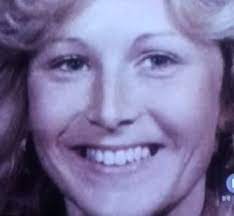
June third, nineteen eighty-one. The start of summer in Minnesota. For most teenagers, it meant freedom, warm nights, and new adventures. For Kimberly Compton, it was the beginning of adulthood. At just eighteen years old, she had recently graduated from high school and boarded a bus to St. Paul. She wanted a fresh start, a job, maybe a little independence.
But Kimberly’s new chapter ended the very same day it began.
Not long after she arrived, she crossed paths with Paul Stephani. He offered her a ride. Maybe he seemed friendly, maybe he looked harmless. After all, killers don’t wear warning labels.
But Paul wasn’t harmless. He took her to a secluded area and attacked her with a screwdriver. He stabbed her over and over again — sixty-one times. The brutality was staggering. It was personal, frenzied, and merciless. Kimberly never stood a chance.
And then came the call.
Shortly after the attack, police received a phone call from a man crying hysterically. His voice cracked as he blurted out: “I just stabbed somebody with an ice pick. I can’t stop myself. Please, God, stop me.”
The officers on the other end could hardly believe what they were hearing. This wasn’t a tip, it wasn’t a witness — it was the killer himself, pouring guilt and panic into the phone. And once again, he hung up before they could trace it.
This second call confirmed what police had suspected since Karen Potack’s attack. Whoever this man was, he wasn’t just reporting crimes. He was committing them. And worse — he couldn’t stop.
The media picked up the story. Soon, the mysterious voice crying after every murder earned a name: The Weepy-Voiced Killer.
Kathleen Greening – The Silent Murder
Not all of Stephani’s crimes came with a phone call. One stood out because of its eerie silence.
In July of nineteen eighty-two, Kathleen Greening, a thirty-three-year-old schoolteacher, was found dead in her own home. She had been drowned in her bathtub. At the time, suspicion fell on her husband, but there was no solid evidence linking him to her death. The case went cold, filed away as an unsolved mystery.
What no one realized then was that Paul Stephani had struck again.
Unlike with Karen or Kimberly, there was no frantic phone call. No sobbing confession. No trembling voice giving away his guilt. For reasons we’ll never know, he kept silent after killing Kathleen. Maybe he didn’t feel the same rush of remorse. Maybe he thought he could get away with it. Or maybe the sobbing calls had become too risky, too obvious.
For more than a decade, no one connected Kathleen to the Crybaby Killer. Her name wasn’t linked to Stephani until his final days in prison, when he confessed to everything. Only then did the truth come out: Kathleen had been another of his victims all along.
Barbara Simons – A Fatal Night Out
By August of nineteen eighty-two, Paul Stephani was restless again. This time, his target was Barbara Simons, a forty-year-old nurse with a kind smile and a trusting nature.
On the night of August fifth, Barbara went to the Hexagon Bar in Minneapolis. She ordered a drink, chatted with people around her, and eventually struck up a conversation with a man — Paul Stephani.
Witnesses later recalled Barbara asking a bartender for a little luck, joking that she hoped the guy she was talking to was safe to go home with. She had no way of knowing she’d just sealed her fate.
Barbara left the bar with Stephani. Hours later, her body was discovered near the Mississippi River. She had been stabbed over forty times.
And, as always, the killer couldn’t keep his mouth shut.
Stephani called police again, his voice breaking: “I’m sorry I killed that girl. I stabbed her. Kimberly Compton was the first one… and now Barbara.”
This call was different. This time, he wasn’t just describing the crime — he was connecting the dots himself, linking multiple victims together. He was building his own case against himself, and the police were listening closely.
The Crybaby Killer had revealed his pattern: he couldn’t kill without confessing. And the trail of tears was getting longer.
Denise Williams – The Woman Who Refused to Die
Just days after killing Barbara Simons, Paul Stephani was back on the hunt. His compulsion was ramping up, and his control was crumbling. On a summer night in August nineteen eighty-two, he picked up Denise Williams, a nineteen-year-old sex worker. She thought she was getting into the car with a customer. Instead, she was stepping into a fight for her life.
Stephani drove her to a quiet industrial area. Then he pulled out his signature weapon — a screwdriver — and lunged at her. He stabbed her repeatedly, but Denise was not going down quietly. She grabbed a glass soda bottle from the car, smashed it across his face, and scrambled free.
She was bleeding, but she was alive. And for the first time, one of the Crybaby Killer’s victims survived and lived to identify him.
Stephani, injured and panicked, did what he always did: he called nine one one. This time, though, it wasn’t to report a body. It was to get help for himself. He was bleeding badly from the broken glass, and he sobbed into the phone begging for an ambulance.
The police had their chance. They connected the dots — the weepy voice begging for medical attention was the same one that had confessed to multiple murders. And when hospital staff treated a man matching Denise’s attacker’s description, they knew they had him.
When Denise saw his picture, there was no hesitation. That was him. Paul Michael Stephani. The Crybaby Killer.
The Investigation – Matching the Voice
Catching him was one thing. Convicting him was another. Investigators had a voice on tape, a survivor pointing the finger, and a string of murders. But what they didn’t have was a traditional smoking gun — no fingerprints, no eyewitnesses placing him at every scene, no confession signed in ink.
The most damning evidence was his own voice. Those calls where he cried, sobbed, and confessed details only the killer could know. But could a jury be convinced?
Police turned to people who knew him best. They played the tapes for his ex-wife, his roommate, and his sister. Each one said the same thing: that voice belongs to Paul. His sister, in particular, broke down in tears when she heard it. She knew without a doubt it was her brother.
But even with all that, the case wasn’t bulletproof. His defense argued that the crying distorted his voice, making it unreliable for voice-matching. The judge was skeptical, and expert testimony on the voice was limited.
What saved the prosecution was Denise Williams. She took the stand and told the jury what happened. She described the screwdriver, the struggle, the broken bottle, the face of the man who attacked her. She identified Stephani as her attacker. And her survival gave prosecutors something they desperately needed: a living witness who could point directly at him.
The Courtroom Drama – Tears Don’t Work Here
In nineteen eighty-four, Paul Michael Stephani went on trial. The courtroom saw the dual sides of him: the violent predator, and the pitiful sobbing voice on the tapes.
The jury didn’t buy the pity act. They saw through the tears. They convicted him of the attempted murder of Denise Williams and the murder of Barbara Simons. His sentence: fifty-eight years in prison.
It wasn’t justice for every victim, but it was enough to keep him off the streets for life.
Stephani would never again stalk the bars of Minneapolis or prowl the streets of St. Paul. The Crybaby Killer was caged.
The Deathbed Confession – No More Secrets
For years, Paul Michael Stephani sat in prison. He aged, he weakened, and eventually, doctors delivered a grim diagnosis: skin cancer. It was terminal. He was going to die behind bars.
And just like that, the Crybaby Killer who once begged police to catch him had nothing left to lose. Facing death, he decided to clear his conscience.
Stephani confessed to more crimes than he’d ever been convicted of. He admitted that he was the one who left Karen Potack bleeding in the snow on New Year’s Eve, nineteen eighty. He admitted to killing Kimberly Compton in nineteen eighty-one, stabbing her sixty-one times. He admitted to murdering Kathleen Greening, the thirty-three-year-old schoolteacher who had been found drowned in her bathtub. For years, suspicion had fallen on her husband. Now, Stephani gave the truth: he had done it.
He told detectives details only the real killer could know — how he left certain belongings, how he staged the scene. It was chilling, but it closed cases that had haunted families for nearly two decades.
The Final Days
Paul Michael Stephani died in prison on June twelfth, nineteen ninety-eight, at the age of fifty-three. He left behind no family eager to defend him, no legacy except the one he carved in blood and tears. His body was buried quietly, without fanfare.
But his story lived on. Not because he was the most prolific killer. Not because his crimes were particularly clever. But because of the way he exposed himself. He was a killer who literally couldn’t keep quiet. His voice, his sobbing, his pathetic phone calls — that’s what made him unforgettable.
The Legacy of the Crybaby Killer
True crime history is littered with terrifying names — the Zodiac Killer, Ted Bundy, the Night Stalker. These men instilled fear with their silence, their ability to vanish into the night. Paul Stephani was the opposite. He was noisy. He was messy. He couldn’t stop confessing.
And that’s why his story still resonates. It’s not just about murder. It’s about contradiction. Here was a man capable of extreme violence, yet incapable of carrying the weight of it. His tears didn’t wash away guilt. They only deepened the horror.
For investigators, the case remains a textbook example of how criminals sometimes sabotage themselves. The very thing Stephani thought would release his guilt — those late-night crying calls — ended up building the case that put him behind bars.
For the families of the victims, the confessions brought a twisted kind of closure. They had answers, but no relief. The truth can be healing, but it can also be salt in the wound.
The Haunting Twist – Tears as Evidence
Here’s the haunting irony: Paul Stephani may have believed his sobbing phone calls made him human, maybe even forgivable. In reality, they exposed him as both a coward and a predator. He thought crying might absolve him. Instead, it betrayed him.
The Crybaby Killer’s voice was his downfall. He delivered his own evidence in real time, crying into the phone while his victims bled. He confessed, but he never really took responsibility.
And that’s why his story lingers — not because of how many people he killed, but because of how strange, pitiful, and chilling it was to hear a murderer sob after each crime.
Conclusion
Paul Michael Stephani, the Crybaby Killer, is remembered as one of the strangest figures in American true crime. His violence was brutal. His victims — Karen Potack, Kimberly Compton, Kathleen Greening, and Barbara Simons — paid the ultimate price. Only Denise Williams lived to tell her story.
But what makes this case unforgettable isn’t just the violence. It’s the contradiction. A man who could stab someone sixty-one times, then collapse into sobs and dial nine one one, begging to be caught.
His legacy is a chilling reminder: monsters don’t always hide in silence. Sometimes, they reveal themselves — crying, confessing, and exposing the darkness they can’t contain.



Comments